Lucknow: In a bid to safeguard traffic personnel from extreme summer conditions, the Lucknow Police is planning to introduce specialized kits and regular health check-ups, alongside exploring the wider use of air-conditioned (AC) helmets. While the innovation promises relief from scorching heat, practical challenges and limited availability continue to hinder its full-scale implementation.
Traffic police personnel, who remain stationed at busy intersections even during peak afternoon heat, face rising stress due to increasing vehicular load, VIP movements, and pollution levels. Recognizing these hardships, the Uttar Pradesh government had initiated a pilot project in 2024, distributing AC helmets in cities like Lucknow and Kanpur. The initiative was formally launched by Chief Minister Yogi Adityanath, raising expectations among personnel for broader access to the equipment.
Features and Benefits of AC Helmets
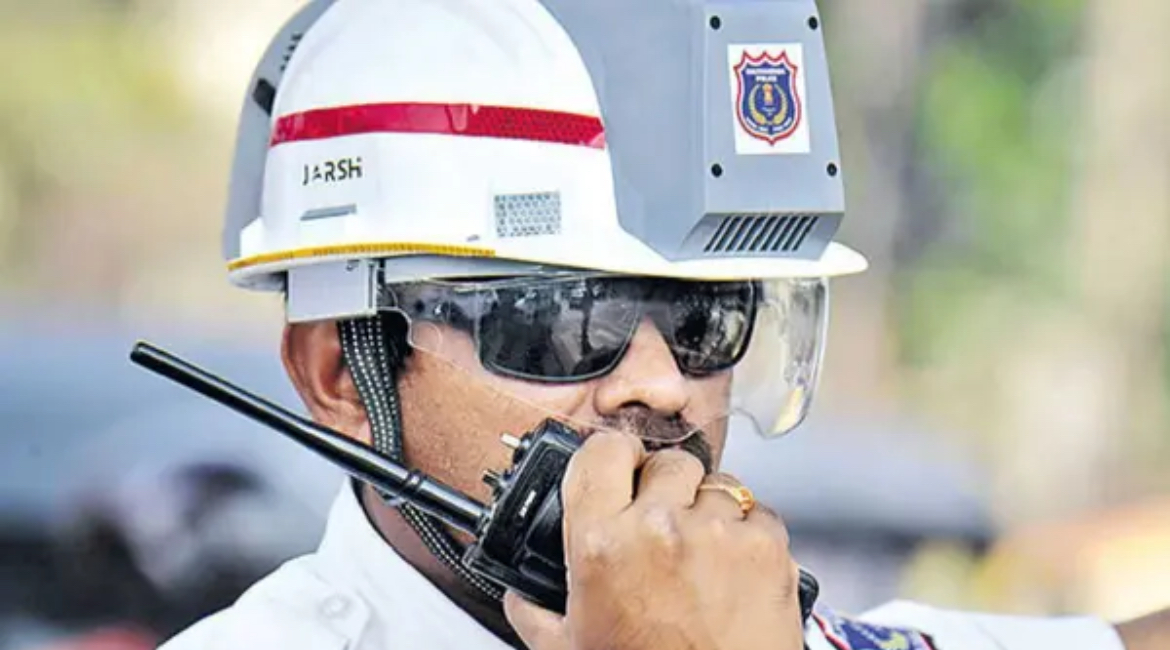
Developed by a Hyderabad-based firm, each AC helmet costs around ₹15,000 and is equipped with an inbuilt rechargeable battery capable of operating for up to eight hours. Designed specifically for traffic duty, the helmet includes a small fan that circulates cool air around the head, reducing temperature by 10–15 degrees Celsius. It also doubles as a heating device during winters and features protective eye covering. Lightweight construction makes it more comfortable than conventional helmets.
Concerns and Limitations
Despite the advantages, trials in Lucknow and Kanpur revealed certain drawbacks. Experts point out that while the helmet cools the head, it does not regulate overall body temperature. According to medical professionals from King George’s Medical University, this imbalance may limit its effectiveness in providing complete relief and could potentially impact health if the rest of the body remains exposed to extreme heat.
Limited Availability and Funding Issues
Although feedback from initial trials has been largely positive, widespread distribution remains a challenge. Officials indicate that no dedicated government funding has yet been allocated for large-scale procurement. Instead, some helmets have been sourced through Corporate Social Responsibility (CSR) initiatives. In Kanpur, around 130 units were distributed across select intersections, while in Lucknow, deployment has been limited.
Ground reports suggest that, as of 2026, most traffic personnel in Lucknow are still operating without AC helmets. Many officers, speaking off record, acknowledged the pressing need for better equipment to cope with extreme working conditions.
Special Kits and Health Monitoring Planned
To address these concerns, Joint Police Commissioner Babloo Kumar stated that the department is working on introducing comprehensive summer kits for personnel. These kits are expected to include sun-protection gear, water bottles, and ORS supplies. Discussions are also underway with IT firms to integrate modern features into these kits.
Additionally, the police department is planning regular health check-ups for traffic personnel in coordination with hospitals. Officials highlighted that prolonged exposure to heat, air pollution, and noise pollution significantly impacts the health of on-duty staff.
Rising Heat Risks for Personnel
Medical experts warn that working in temperatures above 40°C can lead to dehydration and heatstroke, especially for those stationed outdoors for extended periods. Preventive measures such as hydration, shaded positioning, and timely medical attention are crucial for minimizing risks.
Heavy Workforce Managing Traffic
Lucknow’s traffic system is currently managed by nearly 1,500 personnel, operating under a structured hierarchy led by a Deputy Commissioner of Police (DCP), supported by Additional DCPs and Assistant Commissioners. Despite manpower deployment, ensuring the well-being of personnel remains a growing concern amid rising urban traffic pressure.
A more foolproof sustainable solution
While AC helmets represent a promising step toward improving working conditions for traffic police, gaps in funding, distribution, and practical effectiveness highlight the need for a more comprehensive approach. The proposed special kits and health initiatives may offer a broader, more sustainable solution to protect those tasked with managing the city’s demanding traffic conditions.